
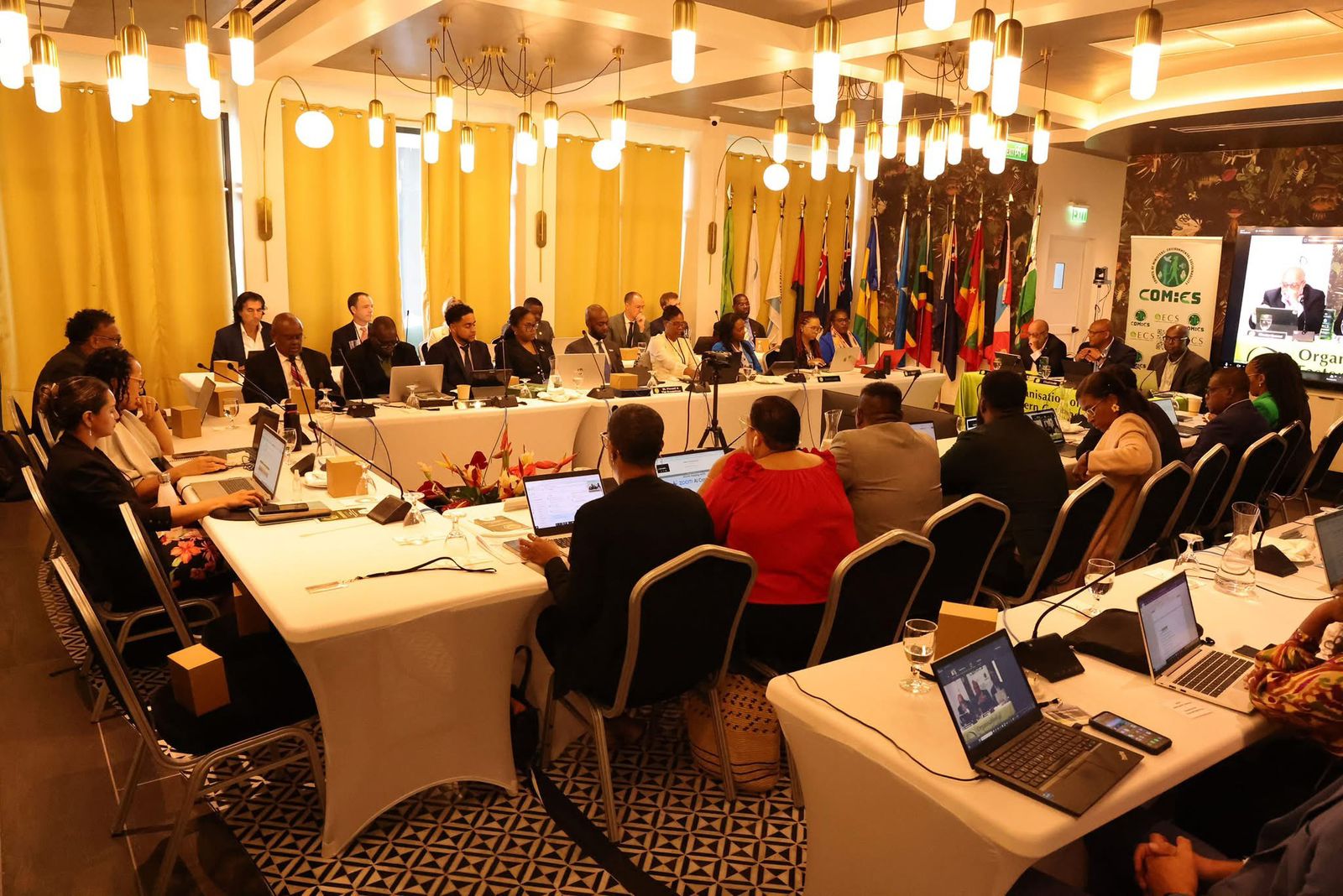
Honourable Dr. Kishore Shallow of Saint Vincent and the Grenadines delivered a forward-looking presentation on innovation, digital transformation and regional resilience during the OECS Council of Ministers: Environmental Sustainability Meeting, held under the theme: “The OECS Collective Resolve: Innovative Pathways in a High-Risk Global Landscape.”
The meeting brought together ministers and regional leaders from across the Organisation of Eastern Caribbean States (OECS) to examine practical and collaborative approaches to environmental sustainability, resilience-building and sustainable development amid growing global uncertainty and climate vulnerability.
Presenting during the Ministerial Panel and Featured Contributions Session on Innovative Technologies, Minister Shallow highlighted the critical role technology must play in strengthening climate resilience, enhancing decision-making and advancing sustainable tourism across the OECS region.
Anchoring his intervention in the OECS Sustainable Tourism Policy 2025–2035, Minister Shallow outlined five strategic pillars relevant to sustainable development, even beyond the tourism sector:
- Data-driven decision making,
- Smart and sustainable destination management,
- Climate resilience and disaster preparedness,
- Digital inclusion and human capacity development, and
- Regional integration and shared platforms.
Minister Shallow stressed that innovation and digital transformation are no longer optional, but essential tools for regional survival and competitiveness in an increasingly high-risk global environment.
“The OECS may not be able to compete on the basis of our size, but if we are technologically agile and strategically integrated, we can become one of the most resilient and sustainable regions in the world,” Minister Shallow stated.
He further underscored the importance of harmonised regional data systems and tourism intelligence platforms supported by environmental indicators, noting that fragmented and outdated systems remain a challenge across the region.
Minister Shallow also pointed to practical applications of technology in sustainable development, including smart destination systems for water management and beach monitoring, as well as collective early warning systems to strengthen disaster preparedness.
Importantly, he cautioned that digital transformation must not widen inequality, but instead empower local economies and strengthen human capacity, particularly in areas such as data analytics and digital skills development.
Supporting the wider discussion on resilience and regional integration, OECS Director General; Dr. Didacus Jules emphasised that the region must move beyond siloed approaches and embrace deeper inter-sectoral cooperation, while Incoming Chair Hon. Cosier Frederick of the Commonwealth of Dominica reminded delegates that OECS states may be small, but they are not powerless and reminded delegates that the next generation will inherit the environmental choices made today.
The discussions also reinforced the importance of valuing and protecting the region’s natural assets, with regional economist Dr. Hyginus ‘Gene’ Leon highlighting the need for Caribbean countries to better integrate natural capital into national development planning and economic valuation.
Minister Shallow’s presentation contributed significantly to the meeting’s broader call for innovative, interconnected and technology-enabled pathways toward resilience, sustainability and regional advancement across the OECS.